Portable Solar Panel for Car Camping: What Actually Works (2026)
I earn a commission if you buy through these links or codes, at no extra cost to you. I only list brands I've used or tested on my own trucks.
For weekend car camping, pair a portable power station with a 100W solar panel, and charge the station off the truck while you drive. On our 4Runner, a 100W panel on the roof rack pulled about 59 watts on a sunny day without direct sun, and the alternator added about 95 watts once the truck was running. Together they kept the power station full by the time we got to camp.
So, I've run a power station plus solar setup in our 4Runner, a Goal Zero setup in our Tundra camper, and hood solar panels on a few trucks. Here's what I learned about solar for car camping, with the real numbers I saw.
My setup: a 100W panel, a power station, and the alternator
On our 2016 4Runner we mounted a Goal Zero Boulder 100 panel on the Front Runner Slimline roof rack and wired it to a Goal Zero Yeti 1500X power station that lives in the back. We also added the Goal Zero Yeti Link, which connects the power station to the truck's battery. That way the station charges off the alternator whenever the engine is running.
The Yeti Link only starts charging once the vehicle battery is above about 13 volts, and it stops when the truck is off. So it won't drain your starting battery and leave you stranded.
- Solar only, sunny day but not direct sun: about 59W from the 100W panel.
- Cloudy day: some watts, but nowhere near the panel's full potential.
- Alternator through the Yeti Link: about 95W as soon as the truck started.
- Both at once: it took power from the panel and the alternator at the same time.
Before I had the solar panel and the Yeti Link, the fridge, camera batteries, and everything else plugged into the station would drain it to about 80% by the time I got to camp. With both charging on the drive, it shows up topped off.
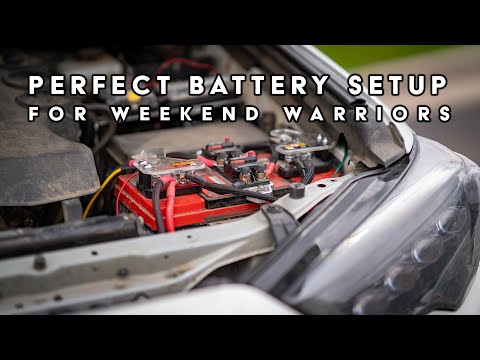
Why the drive matters more than the panel
Be realistic about solar. A 100W panel doesn't make 100W. On the 4Runner I saw about 59W, and on a 100W Lensun hood panel on a 2024 Tacoma I saw about 60 to 80W at peak sun. Clouds, angle, and shade all pull that down.
Our drives to camp are usually a couple hours, and the alternator put in more than the panel did. So if you're building a car camping power setup, I'd get the vehicle charging sorted first, then add solar to keep the station topped off while you're parked.
Roof-mounted vs a loose portable panel
We mounted ours. A few things from that install:
- The factory brackets sit a little high. It was fine for us because our lights already sat at about that height.
- Expect to drill. We bolted the brackets to the panel, flipped the bracket legs around, and drilled two holes in the front load bar because the holes didn't line up. The rear used a slot in the load bar.
- Run a long extension cable. We ran a 30 foot solar extension cable with a KC wire hider, down into the engine bay and up through a rubber grommet into the cargo area.
That long cable is the best part. I can pull the power station out to the camp table and it's still connected to the panel on the roof. Being portable, you can take the station out at camp and plug in your chargers, a blender, or whatever you need, then put it back in the truck when you're done.
If you don't want to drill your rack, a folding panel you set out at camp is the other way to go. You can aim it at the sun and move it out of the shade. The trade-off is that it isn't charging while you drive, and it's one more thing to pack and set up.

If you want a portable panel: what Lensun makes
I haven't tested Lensun's portable panels. I've run their hood panels on my Tundra, a 2024 Tacoma, and a 5th gen 4Runner. But since they're the solar brand I work with, here's what's on their site right now:
| Type | Sizes Lensun lists |
|---|---|
| Foldable panels | 70W for phones and laptops, plus 60W, 100W, 200W and 400W waterproof panels |
| Solar suitcases | 200W, 300W and 500W |
| Solar blankets | 300W 12V for a power station or 12V battery, and a 400W 36V for a 24V battery or power station |
For a 100W panel like the one we ran, Lensun's 100W foldable lists a 16 foot MC4 cable and a 4-in-1 adapter for Anderson, DC5521, XT60, and DC7956 plugs, which covers most power stations. Check which plug your station takes before you order, and check whether a 12V or 36V panel matches what you're charging. Code TVO10 takes 10% off at Lensun.
The other option: solar on the hood
A hood solar panel does a different job. It wires to the starting battery and keeps it topped off while the truck sits, and it leaves your roof free for a tent or rack. I look at it as maintenance charging, not a power plant for your camp gear. If your truck sits for days at a time, that's where I'd start. More on that in my LensunSolar discount code post and the 4Runner hood solar panel post.

What you'll actually power: the fridge
For us, the fridge is the main thing running off the power station all trip. In the Tundra camper, the Goal Zero ran everything: the water pump and an ICECO APL35 dual zone fridge. Later I moved the camper to a REDARC QuickFit75 power panel, which charges from solar, the alternator, or shore power at a campsite.
If you're picking a fridge to run off your station, I covered the ICECO models I've used in the best 12V fridge for overlanding post. ICECO's 12% off applies automatically through my link.
My verdict
If you're a weekend warrior like us, a portable power station with a 100W panel and a way to charge it off the truck is the setup I'd go with. In my opinion you don't need a dual battery setup for that. If you're out for long stretches at a time, a dual battery, camper, or trailer system makes more sense. If you don't want to drill your rack, get a folding panel and set it out at camp, but don't expect it to make its full rating.

FAQ
Is a 100W solar panel enough for car camping?
For keeping a power station topped off on a weekend trip, it worked for us. Just expect less than 100W. On our 4Runner I saw about 59W on a sunny day without direct sun.
Can I charge a power station while driving?
Yes. On the 4Runner we used a Goal Zero Yeti Link wired to the truck's battery. It put in about 95W with the engine running and stopped when the truck was off.
Portable solar panel vs roof-mounted: which is better?
A roof-mounted panel charges while you drive and while you're parked, and you never set it up. A folding panel needs no drilling and you can move it into the sun, but it only charges when you set it out.
Does Lensun have a discount code?
Yes. Code TVO10 takes 10% off at lensunsolar.com. Lensun makes foldable panels, solar suitcases, and solar blankets as well as hood panels.
Hood solar panel or portable solar panel?
A hood panel keeps your starting battery topped off while the truck sits. A portable panel charges a power station for your camp gear. They solve different problems.